

The guitar beckons, its strings promising a world of musical expression. But for beginners, the path forward can feel shrouded in mystery. Chords, tabs, notation – a sea of symbols threatens to drown your enthusiasm. Fear not, aspiring guitarist!
This article isn't here to tell you there's one "right" way to learn. Instead, we'll navigate the strengths and weaknesses of chords, tabs, and other methods, equipping you with the knowledge to craft a personalised learning strategy that unlocks your musical potential.
We'll delve into these methods, explore music notation, and ultimately help you craft a personalised learning path to turn your guitar dreams into reality. Buckle up, and let's embark on your guitar journey together!
Chords are the building blocks of harmony in music. They combine multiple notes played together, creating a rich and full sound. The guitar is a melodic, harmonic and rhythmic instrument meaning that you can strum chords or play melodies or combine both! Most popular music relies heavily on chord progressions to create emotional impact and provide a framework for the songs melodies.
There are two main ways chords are represented for guitarists: chord diagrams and chord charts.

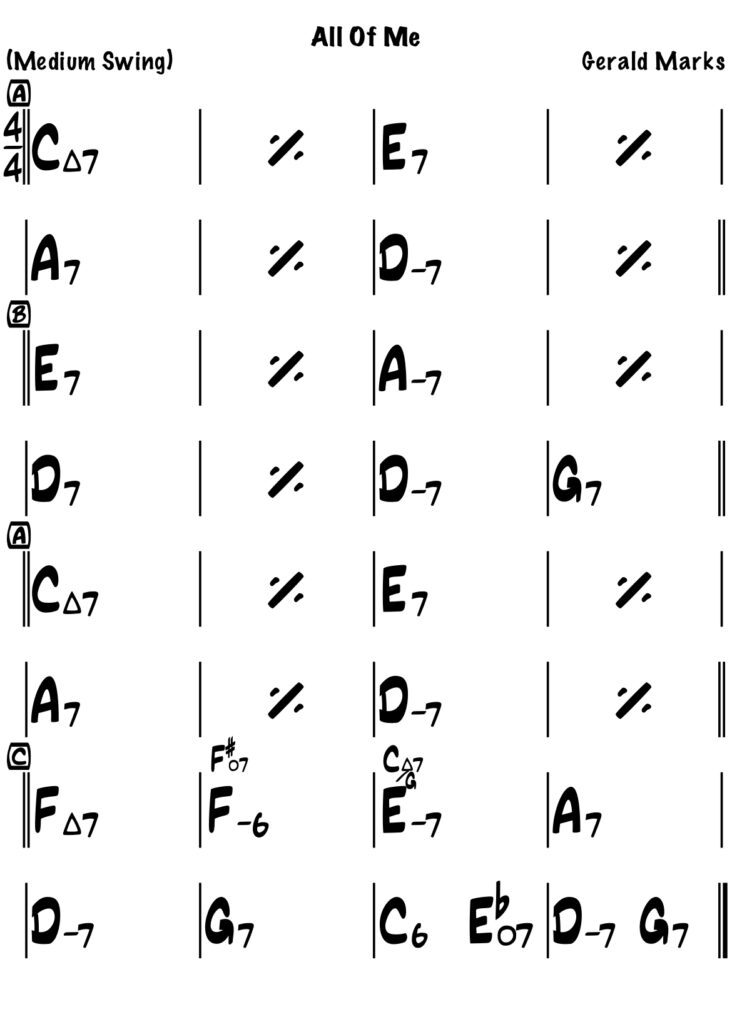
Chord charts and diagrams don’t do a great job of indicating rhythm. You know which chords to play, but not when to strum them.
If a song includes iconic riffs or intricate lead parts, chord charts fall short. They can’t notate those memorable guitar lines.
Some songs feature jazzier chords or unusual voicings that can be unfamiliar for beginners (like the end of the chord chart above). Understanding these requires a deeper knowledge of harmony.

Guitar tab, or tablature, is a simplified notation system specifically designed for guitar. It uses a six-line staff representing the six strings of the guitar. Numbers on the lines indicate which fret to press on each string to play a specific note. The origins of guitar tab are unclear, but it has become a popular way for guitarists of all levels to share music.
Guitar tab is popular because it's straightforward. It tells you exactly which fret to press on each string, making it easier for beginners to learn songs quickly.
However, guitar tab also has drawbacks:
Similar to chord charts, tab doesn't typically show rhythm. Often times tabs will be combined with musical notation to show rhythm, but of course to understand this you need to learn traditional notation, which can be challenging for beginners.
Tabs don't inherently show the underlying harmony of a song. While some tabs incorporate chord symbols above the tablature to address this, it's not always the case. This can make it difficult to understand how the chords work together to create the song's overall sound.
Complex riffs or fast passages can become visually cluttered and confusing in tab form. The more information crammed into a single line, the harder it becomes to decipher what needs to be played.

While chords and tabs are the most common methods, there are other avenues for learning guitar.
Standard musical notation uses staves and symbols to represent notes, rhythm, and other musical elements.
"Learning by ear" refers to the practise of learning a song simply by listening to it and figuring it out on the guitar. How would one start with this? Well you might hear a part of the song that reminds you of a bit in another song, so you try it on the guitar, adjust it a bit and there you go.
The best approach to learning guitar isn't a single method, but a combination of them. Here's how to create a well-rounded learning strategy:
Ultimately, the key is to find an approach that keeps you engaged and motivated. Experiment with different methods, find resources that resonate with you, and most importantly, have fun along the way!
The beauty of learning guitar lies in the freedom to explore. There's no single "correct" path – experiment with chords, tabs, notation, and even learning by ear. Find what keeps you motivated and engaged.
As you progress, you'll naturally gravitate towards methods that suit your musical goals. Remember, the most important ingredient is your passion. Embrace the challenges, celebrate your victories, and most importantly, have fun along the way!
The world of music awaits, and with dedication and a little guidance, you'll be strumming your favourite songs in no time. Now go forth and unleash your inner rockstar!