
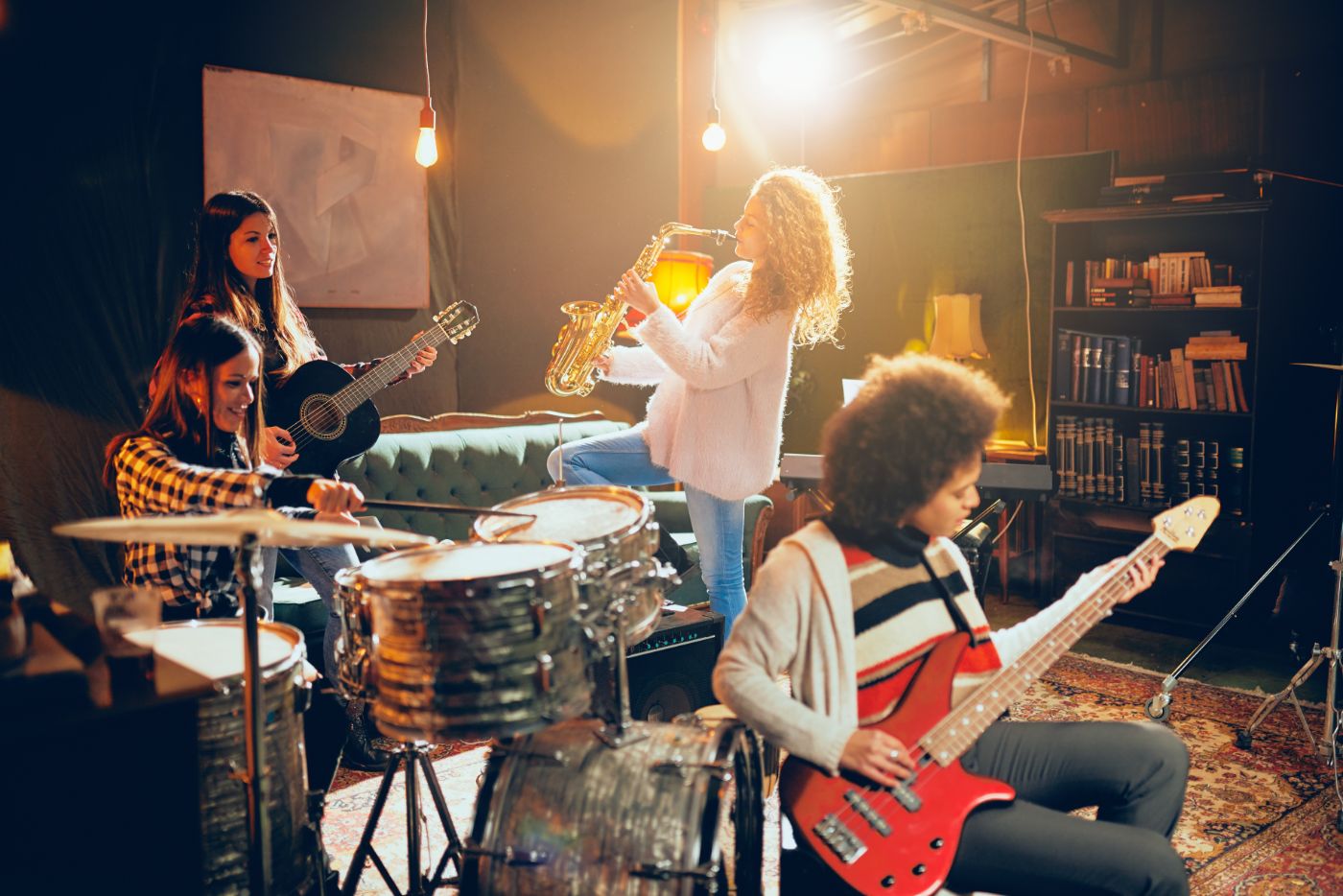
So you’ve decided to take up the drums and you’re keen to dive into getting some basic equipment to get you started? We’ve put together a short list of the five most important pieces of drum equipment plus a few bonus bits that should easily take you all the way through the beginner stage of drumming and well into becoming an intermediate drummer.
In fact, the gear mentioned in the article is even used by the pros, so you can be reassured that you’ll be making good investments.
But what equipment does a beginner drummer need? Here are the five most important pieces of equipment to get when you start drumming.
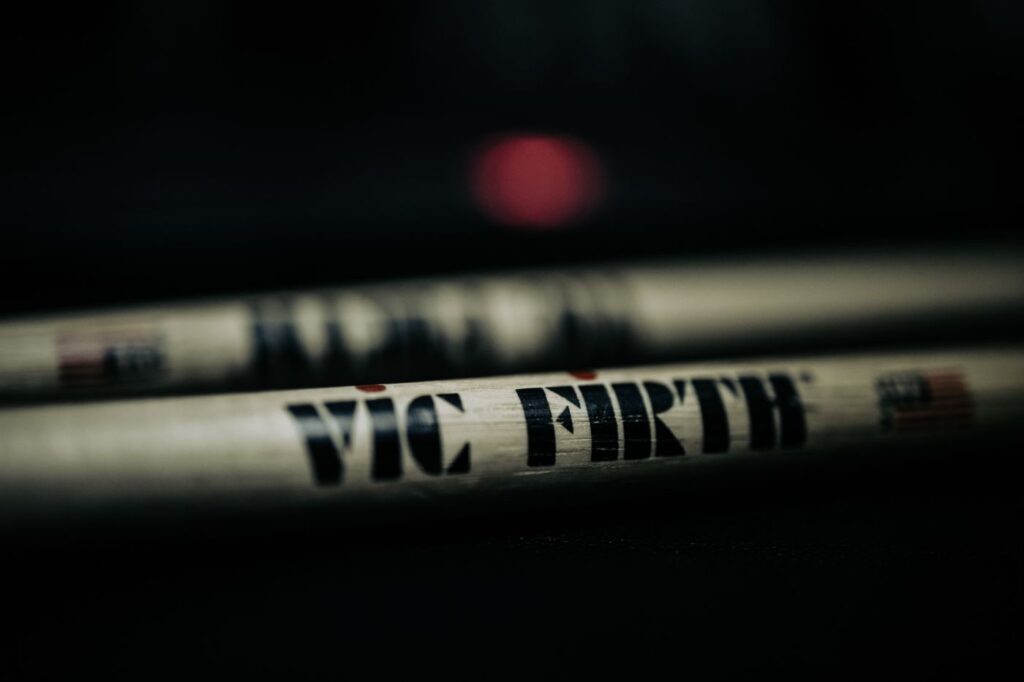
Drumsticks are likely to be your first purchase as a new drummer and luckily they’re a relatively cheap investment, if you’re really lucky you may have even been given or lent a pair. They are generally made of wood such as oak, hickory or maple and are shaped to have one thicker end that you hold and a tip at the other end used for striking the drum or cymbal (not the bass player when he forgets the chord!).
Drumsticks have an alpha-numeric (number and a letter) system that helps you to decide which drumstick is right for you and the music that you play.
The number tells you the circumference or thickness of the stick so once you find one that fits your hand well it’s worth remembering that number.
The letter describes the weight of the drumstick. Heavier drumsticks are better for louder music and lighter sticks are suitable for quieter styles. “A” signifies a light-weight stick meant for jazz or orchestra, “S” sticks are heavier so they’re really good for drummers in marching bands, and “B” is a medium-weight stick favoured by many rock drummers (2B is very common).
There are plenty of drumstick companies to choose from catering for a range of levels and budgets with some of the more famous brands including Stagg, Premier, Vic Firth and Pro Mark.
A drum kit is likely to be the most expensive purchase you will make as a beginner and the range of choice out there can be overwhelming. We’d recommend talking to your drum tutor before buying a drum kit but here are a few bits of info that should help.
Beginner drum kits are made up of three main components: the drums, hardware and cymbals.
Drum kits are modular so they can be upgraded bit by bit later on, for instance you might start with a better snare drum and then some sturdier stands or a smoother kick drum pedal. The possibilities are endless!

A metronome is a necessity for any drummer looking to improve their rhythm and groove. Metronomes keep time by playing a “click” sound at a set BPM (number of beats per minute) and can be adjusted to different speeds.
The great thing about metronomes is that they start off pretty cheap if you want to buy a physical device or they can even be downloaded for free on your phone or computer.
The benefits of practising using a metronome are huge and will pay dividends in the long run even if you don't plan on recording or playing to click. With a metronome you can take any exercise or section of a song (such as a fill or groove) and practise it in time but much slower. Once you’ve got it working at the slow speed you can try it at a faster tempo and then speed up the tempo a little at a time to increase the difficulty. Over time you’ll be able to clearly see your progress.

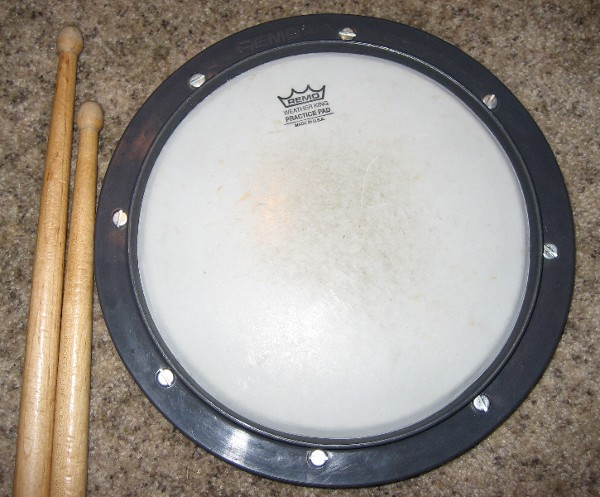
Drums are noisy as we all know and you can't be behind your kit 24/7. Practice pads are a great tool for both aspiring and experienced players because they allow drummers to practise quietly or warm up before a show.
Drummers use practice pads to practise stick techniques and drum rudiments rather than grooves and fills. They are usually made from rubber or a material that can roughly replicate the rebound of a stick hitting a real drum without the loud volume.
Drum practice pads start out from around £10 for a simple rubber pad but can be as much as £50 for more sophisticated pads with a more realistic feel.
It could be argued that a drum throne (sometimes called a drum stool) should be included in the hardware of a drum kit but we thought it best to mention them separately as there’s a few things you should know when purchasing a drum throne.
Often, a drum seat will be included in a beginner drum kit and these can be fine for when you first start out and aren't practising for too long at a time. However, if you start getting more serious you’ll realise pretty quickly that it's pretty important to find a seat that provides more support and is more comfortable. Sturdiness is another consideration if and when you want to take your drums out to a rehearsal or to play at a gig.
You can even buy drum thrones that include a speaker in the seat so that you can feel the drum hits through it! This is common among pro players who wear in-ear-monitors and feel like they lose the feeling of hitting the drums by wearing earphones.
Drum thrones start from around £30 with better quality seats available for around £120+
There’s always more equipment you can buy for drumming, it’s actually never ending! But here are a few more essentials we’ve included as a bonus to help you get a great starter set up.
Drum Mat: A drum mat or carpet is placed beneath a drum kit to stop the kit sliding around, to protect the floor and to collect all the little bits of stick that break off the drumsticks as you play. Expect to pay £30+ for a beginners drum carpet.
Drum Bags: If you want to take your drums to a rehearsal or show you’ll need some drum bags for your drums, cymbals and hardware. A complete starter set can cost around £200.
Recording Device: This one is a bit of a cheat because these days everybody has a phone to record videos and audio on. Recording and listening back to your playing is one of the best ways to spot your mistakes and improve.
Buying equipment for drums never really ends and figuring out how to upgrade your setup is sometimes just as much fun as actually drumming, although it can get expensive. Hopefully this article gives you a good grasp of the basics and what you can expect to spend.
Although it may seem daunting it’s important to remember that you don't have to buy everything all at once and you can also find some good deals second hand. Your drum tutor is likely to know if there’s any good deals to be had so make sure to ask for their advice.