
When embarking on your guitar-playing journey, effective practice is essential. Whether you’re a complete beginner or transitioning from another instrument, adopting the right practice habits can significantly impact your progress. In this article, we’ll explore best practices for practicing the guitar, emphasising a holistic approach that goes beyond merely playing your favourite riffs or genres.
The key to unlocking your true potential lies in how you practice. Just like a sculptor meticulously chipping away at stone, effective guitar practice requires focused effort, not simply going through the motions. By incorporating structure and intentionality into your practice routine, you'll be amazed at how quickly you progress and how much more enjoyable the learning process becomes.
Let's explore the essential elements that transform guitar practice from aimless noodling into a powerful tool for musical mastery.

While the allure of strumming along to your favourite songs is undeniable, effective guitar practice goes far deeper. It's a multi-faceted approach that transcends simply playing tunes. Effective practice involves targeted exercises that hone specific skills like finger dexterity, smooth chord transitions, and precise picking techniques, while also incorporates drills to strengthen your sense of rhythm and timing, the bedrock of any great guitarist.
Additionally, dedicating focused attention to areas you find challenging, like mastering barre chords or navigating the fretboard, is crucial for well-rounded development. By strategically incorporating these elements, you'll transform your practice sessions from aimless noodling into a targeted workshop that accelerates your progress and unlocks your true musical potential.
Building a strong foundation in guitar playing involves focusing on several key areas:
This encompasses proper finger placement, relaxed hand positioning, and efficient picking technique. Start by practicing basic exercises to develop accuracy and fluidity in your movements.
Spending time to master smooth chord changes will give you a massive pay off when playing songs. Dedicate time to practicing transitions between chords, focusing on smoothness and accuracy. Aim for a seamless flow as you move from one chord to the next, creating a cohesive musical tapestry.
Learning about scales, how they sound and how they work on the fretboard is a great use of your practice time. Scales not only strengthen your fingers and improve dexterity, but also unlock a deeper understanding of the fretboard layout and the relationships between notes. Think of scales as the building blocks for riffs and solos.
A strong sense of rhythm is essential for keeping time and creating a groove. Practice basic strumming patterns with a metronome to develop a steady tempo and internal clock. As you progress, explore more complex strumming techniques and experiment with adding rhythmic accents.
Developing your ear is a powerful tool for guitarists. Practice exercises that help you recognize notes, intervals, and melodies by ear. This skill empowers you to learn songs by ear, improvise with confidence, and eventually, craft your own music with a deeper understanding of musicality.

The best way to practice guitar involves a structured routine with specific goals. Here are some tips:
Set realistic goals: start with achievable goals and gradually increase the difficulty as you progress.
Focus on quality over quantity: practicing for 15 minutes with focused attention is more beneficial than an hour spent mindlessly strumming.
Break down complex tasks: when learning a new skill, break it down into smaller, more manageable steps.
Use a metronome: practicing with a metronome helps you develop a sense of timing and rhythm.
Record yourself: recording your playing allows you to identify areas for improvement.
Most importantly, have fun! Learning guitar should be enjoyable. Choose exercises and songs you enjoy playing.
The rate of progress varies from person to person. Consistent practice, patience, and a growth mindset are essential. Celebrate small victories along the way. Remember, Rome wasn’t built in a day, and neither are virtuoso guitarists. Embrace challenges and setbacks as opportunities for growth.
A positive mindset fuels improvement. When you stumble, view it as a stepping stone toward mastery. The journey is as enriching as the destination. Enjoy the process, and soon, you’ll strum your way to greater proficiency.
Here are some common hurdles beginners face:
Switching smoothly between chords requires finger independence and coordination. Practice slow and deliberate chord changes with a metronome.
Mastering different strumming patterns takes practice. Focus on keeping your strumming arm relaxed and maintaining a consistent tempo.
Barre chords require pressing down multiple strings with one finger. Practice building finger strength and gradually increase the pressure applied.
Familiarising yourself with the fretboard layout helps you visualize notes and scales. Use fretboard diagrams and practice exercises to improve your fretboard knowledge.
Speed comes with practice and good technique. Start slow and gradually increase your speed while maintaining accuracy with a metronome.
Understanding how chords work together is essential for creating pleasing music. Your guitar teacher can guide you through basic harmony concepts.
Songwriting requires a strong foundation in theory and technique. Don't worry about writing complex songs initially. Start by experimenting with simple chord progressions and melodies.

Beyond regular practice, there are other ways to improve your guitar playing:
Listen to a variety of music: pay attention to how different guitarists use technique, theory, and expression in their playing.
Take guitar lessons: a good guitar teacher can provide personalized feedback, answer your questions, and keep you motivated.
Jam with other musicians: playing with others is a fun and educational way to develop your skills.
Watch instructional videos: there are many free and paid online resources that offer guitar lessons and tutorials.
Effective practice is the key to guitar mastery. By following these tips and approaching learning with dedication and passion, you'll be well on your way to becoming a skilled and versatile guitarist.
Remember, the journey is just as important as the destination. Enjoy the process of learning and have fun playing the guitar!
The guitar beckons, its strings promising a world of musical expression. But for beginners, the path forward can feel shrouded in mystery. Chords, tabs, notation – a sea of symbols threatens to drown your enthusiasm. Fear not, aspiring guitarist!
This article isn't here to tell you there's one "right" way to learn. Instead, we'll navigate the strengths and weaknesses of chords, tabs, and other methods, equipping you with the knowledge to craft a personalised learning strategy that unlocks your musical potential.
We'll delve into these methods, explore music notation, and ultimately help you craft a personalised learning path to turn your guitar dreams into reality. Buckle up, and let's embark on your guitar journey together!
Chords are the building blocks of harmony in music. They combine multiple notes played together, creating a rich and full sound. The guitar is a melodic, harmonic and rhythmic instrument meaning that you can strum chords or play melodies or combine both! Most popular music relies heavily on chord progressions to create emotional impact and provide a framework for the songs melodies.
There are two main ways chords are represented for guitarists: chord diagrams and chord charts.

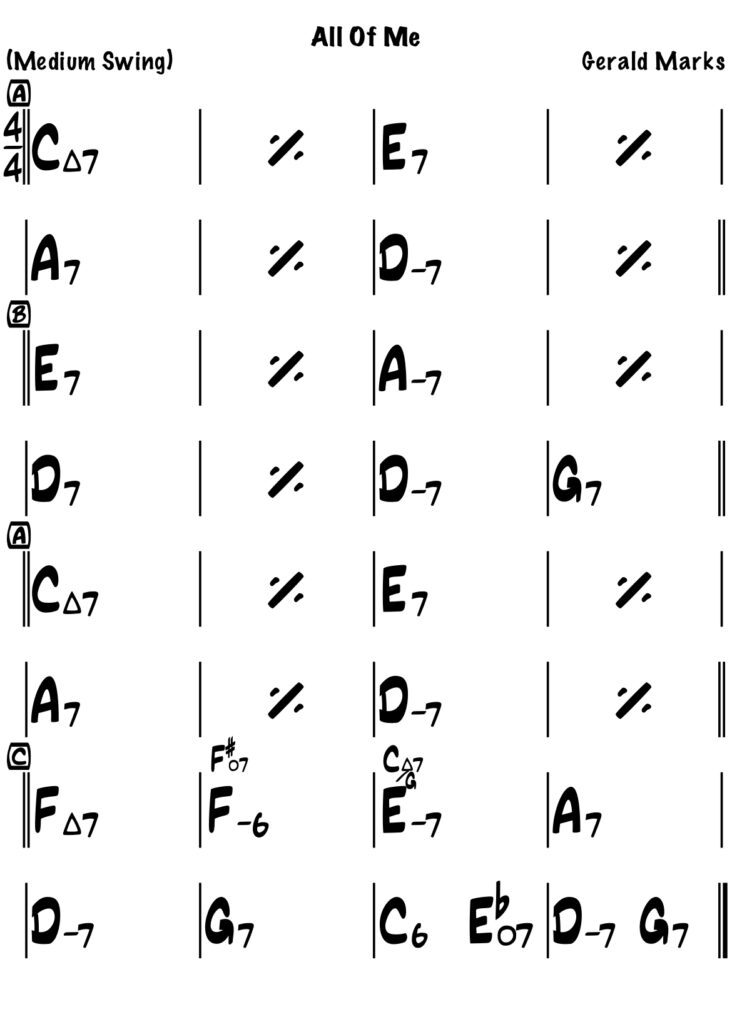
Chord charts and diagrams don’t do a great job of indicating rhythm. You know which chords to play, but not when to strum them.
If a song includes iconic riffs or intricate lead parts, chord charts fall short. They can’t notate those memorable guitar lines.
Some songs feature jazzier chords or unusual voicings that can be unfamiliar for beginners (like the end of the chord chart above). Understanding these requires a deeper knowledge of harmony.

Guitar tab, or tablature, is a simplified notation system specifically designed for guitar. It uses a six-line staff representing the six strings of the guitar. Numbers on the lines indicate which fret to press on each string to play a specific note. The origins of guitar tab are unclear, but it has become a popular way for guitarists of all levels to share music.
Guitar tab is popular because it's straightforward. It tells you exactly which fret to press on each string, making it easier for beginners to learn songs quickly.
However, guitar tab also has drawbacks:
Similar to chord charts, tab doesn't typically show rhythm. Often times tabs will be combined with musical notation to show rhythm, but of course to understand this you need to learn traditional notation, which can be challenging for beginners.
Tabs don't inherently show the underlying harmony of a song. While some tabs incorporate chord symbols above the tablature to address this, it's not always the case. This can make it difficult to understand how the chords work together to create the song's overall sound.
Complex riffs or fast passages can become visually cluttered and confusing in tab form. The more information crammed into a single line, the harder it becomes to decipher what needs to be played.

While chords and tabs are the most common methods, there are other avenues for learning guitar.
Standard musical notation uses staves and symbols to represent notes, rhythm, and other musical elements.
"Learning by ear" refers to the practise of learning a song simply by listening to it and figuring it out on the guitar. How would one start with this? Well you might hear a part of the song that reminds you of a bit in another song, so you try it on the guitar, adjust it a bit and there you go.
The best approach to learning guitar isn't a single method, but a combination of them. Here's how to create a well-rounded learning strategy:
Ultimately, the key is to find an approach that keeps you engaged and motivated. Experiment with different methods, find resources that resonate with you, and most importantly, have fun along the way!
The beauty of learning guitar lies in the freedom to explore. There's no single "correct" path – experiment with chords, tabs, notation, and even learning by ear. Find what keeps you motivated and engaged.
As you progress, you'll naturally gravitate towards methods that suit your musical goals. Remember, the most important ingredient is your passion. Embrace the challenges, celebrate your victories, and most importantly, have fun along the way!
The world of music awaits, and with dedication and a little guidance, you'll be strumming your favourite songs in no time. Now go forth and unleash your inner rockstar!
Taking guitar lessons can be an exciting and exhilarating experience as well as hard work. Learning your favourite riffs, licks and songs can provide huge satisfaction and enjoyment that you can enjoy for the rest of your life. Music really is magic.
Any experienced guitarist will tell you that there are hundreds of mistakes that they made when starting out and would avoid if starting again at the beginning.
In this article we look at some tips that could make your musical journey of learning the guitar smoother, more efficient and less painful.
Regular practice is extremely important if you want to progress your guitar skills. But it’s also important to practice the right things and in the right way if you want to avoid getting stuck in a rut which can lead to boredom and giving up eventually.
When starting your guitar lessons your tutor will likely tell you that 30 minutes is a good amount of time to practice for everyday if possible. 30 minutes may sound like a long time to commit everyday but think about it this way, the first 5/10 minutes is all about shaking off the rust and getting back up to where you were at yesterday. So that only leaves you about 20 minutes of actual practice.
While it might be tempting to go straight in to the songs you’ve learned, try to begin with any exercises your guitar tutor has set such as finger exercises, scales or chord exercises. These will get your fingers warmed up and make the songs much easier to play.
Using a metronome is a great habit to get into as early as possible. A metronome will help you develop your rhythm and groove (vital for any instrument) as well as helping you to keep track of your progress. Last week you could only play that scale at 90 bpm but this week you managed it at 100 bpm, that’s progress!

Learning guitar can become frustrating at times especially when you’re stuck on something that your fingers just won’t do. But it’s important to persevere even when it seems impossible.
One of the first major challenges for students is being able to hold your fingers in place for chords and then move your fingers in time for the next chord. Once you can do that the next one that gets everybody is learning the F major barre chord shape.
WHatever you’re stuck on, it’s easy to feel like you’re not improving. “I couldn’t do it yesterday and I can’t do it today”. But many things including playing guitar don’t follow a linear path when it comes to improving. In guitar if you’ve practiced enough, one day it will just happen out of nowhere and feel really easy even when it felt impossible the day before. So don’t just give up!
Singing is so important when it comes to learning any musical instrument. You don’t have to be the best singer in the world either! But start singing along with your guitar as soon as possible, even if you don’t want to sing infront of anyone else.
Singing along helps you to keep track of where you are in the song. Not sure which verse it is or which section comes next? The lyrics should give you a much better idea. Not sure of how that riff is supposed to go? Sing it to yourself and try to match your voice.
Many people find singing and playing guitar difficult but when you’re starting out at guitar lessons, but playing guitar is difficult anyway so you might as well sing too. And it’s much easier to learn to sing along when you’re starting than later on.
It’s also just much more fun to be able to sing along while playing your favourite songs too.

If you turn up to your guitar lesson having not learned the previous weeks material then you are wasting your own time because your tutor will have prepared some new material for this lesson and it might rely on you knowing how to play the music from last week.
If you can’t play last weeks material then you’ll need to spend this lesson practicing it with your tutor and lessons are far too valuable to spend practicing when you can practice guitar at home for free. Guitar lessons are for learning new things and getting help on things that you are genuinely stuck on.
If you make sure that you’ve always had a good go at last week’s material you’ll not only be your guitar tutors favourite student but you’ll also progress rapidly and be playing those riffs in no time.
Learning guitar is a really rewarding experience and guitar lessons are a great way to progress efficiently and avoid getting stuck. But you only get out what you put in and hopefully this article helps you to avoid mistakes that many other guitarists have made in the past.
As a bonus tip it’s important to go out and watch live music. Seeing real guitarists play at a live gig and observing how they play, what equipment they use, how they interact with the rest of the band can be an incredible valuable learning experience, not to mention inspiring!
Learning any skill is all about progressing and maintaining the inspiration you felt when you first started. The tips in this article are as much about staying inspired as they are about practicing or the actual guitar lessons themselves.
Singing isn’t just about hitting the right words and the correct notes in the right order. Experienced singers have a range of techniques and vocal effects that they can choose from to help them express the right emotion when singing different songs.
So how do you add these vocal techniques to your own toolkit so that you can take your singing from beginner to pro? Well the first step is to know the names of the techniques and be able to hear when other singers have used them in famous songs. Why did they choose to use it there? What was the effect? How do they deliver the song and how do they move between these techniques?

In the article below we’ll give you a beginner’s guide including descriptions of the sound, how to do it and some famous examples.
Remember that none of these techniques should feel uncomfortable to do or give you a sore throat if done correctly and that to really understand and master these sounds the best thing to do is to discuss it with your vocal tutor.
Twang is a bright, piercing quality in the voice that adds clarity and resonance helping the vocal to cut through the mix and sound more powerful. Babies twang when they cry which stops them from hurting their throat while projecting lots of volume.
It’s different from belt as it focuses on nasal resonance rather than intense power and is often used by rock and pop singers to add character to a vocal.
Too much Twang can sound harsh and silly (imagine Axel Rose doing an impression of himself), but mixing different amounts of it into your usual singing voice can help to add power to your vocal.
To produce twang, focus the sound in the nasal cavity while maintaining proper breath support.
Beyonce uses twang most of the way through this performance to help her vocal sound bright and loud, cutting through the mix of a huge sounding band. Other famous examples of singers using twang include "Sweet Child O'Mine" by Guns n Roses or "I'm Outta Love" by Anastacia.
Belt or "belting" is a vocal technique that adds power and intensity to a performance and is used in pop and musical theatre genres by vocalists when singing powerfully in their head or mixed register. Some tutors refer to it as singing in the head voice with the power of the chest voice but can be harmful to the voice if done incorrectly.
Belt is different from twang as it emphasises powerful chest voice and facial resonation rather than the more nasal and metallic sound of twang.
To belt, engage the chest voice, support the sound with proper breath control, and use resonation in the mask of the face (not the nasal cavity).
In "I Will Always Love You" Whitney Houston uses belt to deliver the chorus with a power even though the notes are high in her register (unlike the verses). It really helps to express the emotion of the song and make her version unique from the original by Dolly Parton's who chose a more subdued delivery of the chorus.
Vocal cry or whimper adds a vulnerable and emotional quality to the voice and you can hear it from lots of modern pop singers when performing ballads or sad songs.
Cry technique can also help singers soften the sound of their mixed and head voices which can sometimes sound overly bright and harsh.
It's different from sob as it sounds brighter and focuses on controlled breath breaks and crackling for emotional expression.
To create a cry sound, focus on the breath control and allow the voice to break or crack slightly, conveying a sense of vulnerability.
Adele uses cry mode vocal technique to deliver a really emotional performance particularly in the chorus sections.
Sob is a vocal technique that produces a trembling or shaking quality in the voice, often associated with intense emotions.
It's often confused with, but different from cry as it involves less physical engagement but adds a higher level of emotional expression with quivering or shaking in the voice. A good way to think of the difference is that while cry can sound like a whimper from a puppy, sob is more like a person singing while crying (confusing!).
To sob, engage the vocal cords while allowing the voice to quiver or shake slightly, conveying a sense of deep emotion.
In "Stay With Me" you can hear that Sam Smith has the sound of sobbing all the way through the song as his voice quivers and breaks while also sounding light and airy.
Fry is a vocal technique that produces a low and gravelly sound, often used for stylistic effect and is different from belt as it creates a raspy and gritty tone in the lower register. Think Miley Cyrus talking in her croaky voice - thats vocal fry.
Fry is a great starting place for leading other techniques such as vocal distortion and screaming.
To achieve vocal fry, relax the vocal cords and engage the lower register of the voice, creating a raspy and gritty tone.
Britney Spears adds vocal fry into the opening "oh baby, baby" and then into single words the verses as a stylistic hook. Listen for when her voice moves from light and breathy to croaky.
Hopefully that gives you a good understanding and some references so that you can start adding more variation and expression to your singing. Choosing to use different techniques for certain songs or even sections of songs can really add an impressive layer of sophistication and interest to your performances as well as making your own arrangement of a song unique and personal.
As always, discuss these techniques and how to practice them safely with your vocal tutor who will be able to give you exercises for each specific sound.
In this article we’re going to answer some frequently asked questions that new beginners and vocal students often ask about singing.
These answers are intended to give you a basic idea and it’s always best to consult your vocal tutor to get the best advice on any singing related issue.
Yes! At Rhythm Inc. we believe that everybody has the potential to learn to sing and express themselves through vocal performance. While some people are blessed with innate natural talent from a young age, it is possible for anyone else to learn the basics with good direction and plenty of practice.
Through developing posture, breathing, pitch recognition, vocal technique and an understanding of how music works, it’s possible to improve your singing ability and raise your confidence, even if you find singing really difficult at first.

The short answer to this is dedication, just like any skill. With singing this is true, but even more so. Great singers not only practise regularly, but also spend a lot of time listening to other singers and musicians to find new ideas that they can use for their own performances.
When it comes to practice, the best singers don't just spend an hour a day belting out songs from their repertoire either! There are so many techniques involved in expressive singing that might require you to practise songs you would never perform live yourself.
One example is putting the song “Sweet Child O’Mine” by Guns n Roses into your regular routine to practise using the “twang” technique, or the song “Bring Him Home” from the musical Les Misérables to practise the “cry” sound.
Technically this is referred to in singing as “projection” and comes from performing proper technique. A singer’s power comes from the diaphragm which is the muscle located across the inside of your abdomen, beneath the lungs.
The diaphragm’s job is to expand the lungs allowing you to hold more air, and in singing air is the most precious commodity because without it we can’t make a sound.
A mistake that many novice singers make is breathing in by expanding the chest upwards, which raises the shoulders and basically tightens your whole upper body making singing more difficult. Another mistake is to “try harder” and sing from the throat, causing tension there - another no no!
Breathing from the diaphragm (you’ll know that you’re doing it right if your belly gets bigger when you breathe in) prevents tightening your upper body or throat up, allowing you to sing freely and with more power if you choose to do so.
Ask your singing tutor for exercises to practise this.
Looking awkward when you sing usually comes from feeling tense or anxious, which usually comes from being unprepared and under rehearsed. The best defence against feeling out of place on stage is to make sure that whatever song you’re going to perform, you know it like the back of your hand.
If you’ve ever wondered how popstars or rockstars can look so confident on stage and make the whole thing seem effortless, it’s because to them it is. By the time they are performing the song at a show or on TV, they will have rehearsed that song so many times that they are probably sick of it!
They have probably spent hours preparing the song for rehearsals let alone the final performance. So if you feel awkward or anxious on stage, make sure you know the song so well that you can relax while singing it.
Make sure you’re not trying to remember lyrics or the order of the song. At that point you’ll be able to enjoy yourself and you are much less likely to look awkward.

Every song has its own range and its own set of techniques that it requires to sing convincingly. The song that you’re struggling with is possibly not in your range or requires a particular technique that you haven't mastered yet.
Range refers to the lowest and highest note you can sing. When you start singing you’ll likely have quite a limited range whereas professional singers can usually sing really low notes and really high notes.
There are exercises that you can do to improve your range as well as improvements to your current technique which will help to unlock parts of your range that you previously were unable to access.
In the meantime you might want to change the key of the song so that it fit’s more neatly into your current range. If you’re a girl and the song was written for a boy to sing then it’s likely that you’ll need to change the key to suit your range as boys can usually sing much lower than girls and vice-versa.

This question depends on a number of factors such as what are your goals, how long have you been singing, what type of show or shows are you preparing for and whether you’re currently ill or healthy.
Generally people new to singing should start with around 15 minutes per day and gradually build up their stamina over time. Professional singers might do an hour per day just on exercises and warm ups.
The main thing is to practise enough to develop your technique but not so much that you begin to get vocal fatigue.
Hopefully that gives you some good starting points for conversations with your singing tutor. Learning to sing is a long but rewarding journey and along the way you’ll come up against lots of obstacles.
With great tuition and guidance you hopefully don’t get stuck for too long and can carry on your progress to become the anger you always wanted to be!
A lot of people want to be able to sing like their favourite bands or artists. Whether you’re looking to impress your friends and family with your voice or simply have fun and express yourself through music, singing lessons can help you reach your goals.
Signing up for singing lessons is an excellent way to boost your skills and confidence, but really common to feel nervous or unsure about what to expect. Rest assured, we've got you covered!
In this article, we'll provide you some tips and guidance on how to prepare for your first singing lesson at Rhythm Inc in Barnsley, South Yorkshire.
Before you begin singing lessons, it's crucial to think about what you want to achieve. Do you wish to sing in a band, at a school event, on a television show like The Voice, or simply sing for fun?
Are you looking to learn a specific musical genre or style, such as pop, rock, jazz, or classical? Do you want to boost your vocal range, tone, pitch, or power? Having a defined goal can help you and your teacher plan lessons and track your progress and also helps to maintain your motivation and focus.

There are a number of reasons why you might wish to take singing lessons:
When you come to your first singing lesson, you don't need to bring much. Just make sure you have:
A bottle of water: Singing can be thirsty work, therefore it is critical to stay hydrated. Water helps lubricate and protect your vocal cords. Avoid consuming anything that will dry up or irritate your throat, such as coffee, tea, alcohol, or carbonated beverages. Hydrate yourself before, during, and after your lesson.
A notebook and a pen: You may want to take notes throughout your lesson, such as the names of the songs, exercises, or techniques you learnt; the feedback or advice you received; and the goals or homework you assigned. Writing things down will allow you to better remember and review them later.
A recording device: You may also want to record your lesson using a phone, iPad, or specialised device. Recording your class allows you to listen back to your singing, assess your strengths and faults, and track your progress. You can also use the recording to practise at home or show it to others.
A song or a piece of music: If you have a song or piece of music that you want to learn or practise, feel free to bring it to your lesson. Most times your singing teacher will be able to find the song on the web through Spotify or Youtube, but if it’s a lesser known piece of music feel free to bring a copy on CD or USB drive. Your teacher will gladly assist you with your song as long as it fits your level and aims. However, if you don't have a song or a piece of music, don't worry. Your teacher will give you with appropriate materials for your class.
Your first singing lesson will be an exciting and entertaining experience as you meet your tutor and explain your goals and aspirations and ask any questions you might have. Your singing teacher will also evaluate your current ability level, vocal range, and musical preferences. Based on this, your teacher will create a tailored lesson plan for you that will include:
Vocal exercises: These easy and enjoyable vocal exercises will help you prevent vocal issues, warm up your voice, and enhance your vocal abilities. You will gain knowledge on how to control your pitch, breathe, make sound, sing in tune, explain your words, and convey your feelings. Additionally, you will learn how to sing melodies, arpeggios, intervals, and scales.
Singing techniques: These are specific and practical approaches that will help you sing more effectively and easily. You will learn how to use your diaphragm, increase your range, improve your tone, project your voice, sing with vibrato, dynamics, and flair.
Singing songs: This is the most enjoyable and rewarding part of your lesson. You'll be able to sing songs that you enjoy, are appropriate for your level and aspirations, and will challenge and encourage you. You'll discover how to sing the lyrics, melody, harmony, and rhythm. You will also learn how to interpret the music, express its meaning, and perform it.

Singing lessons are great fun as well as being benifical and rewarding in a nuber of ways. Taking singing lessons will help you to:
Improve your singing skills and confidence: You will learn to sing more effectively, easily, and comfortably. You'll also learn how to sing in various genres and styles of music, whether solo or in a group. You'll gain confidence in your voice and yourself, allowing you to sing in front of others without fear or embarrassment.
Enhance your musical knowledge and appreciation: You'll learn how to understand the basic concepts of musical theory and appreciate musical history and culture. You'll also learn how to listen to music, how to analyse music, and how to critique music. You'll grow more conscious and curious about music, and you'll discover new songs, performers, and genres you'll enjoy.
Boost your physical and mental health and well-being: Singing is excellent for both your body and mind. Singing can help you breathe easier, improve your posture, boost your immune system, lower your blood pressure, and relieve stress. Singing can also help you express your feelings, lift your spirits, boost your creativity, and engage your brain. Singing can increase your happiness, health, and intelligence.

We hope this article provided you with useful information and guidance on how to prepare for your first singing lesson. We're excited to meet you and help you achieve your singing goals. Whether you want to sing for joy, pleasure, or fame, we'll make sure you have a good time while learning a lot. So don't delay; sign up for your first singing lesson today and join our music community. You'll be singing like Dua Lipa, Beyoncé, Justin Bieber, or Harry Styles in no time!